


You don’t have to look hard or far to find AI generated content and material. It has become a part of how we interact with the internet and what we interact with in a very short amount of time. It’s estimated that over 50% of the internet is now AI generated content.
Writers are writing less, designers are designing less and video creators are creating content from themselves less. It’s not uncommon to see a very long winded and preachy AI-generated caption. Or, an unbelievably realistic video generated from Sora being spread like wildfire and spoken about as if it was real.
We’re optimizing our processes by simply having AI do it for us. What greater optimization is there than an output generated within 2 seconds. Who has time to care about process and detail?
AI’s Emphasis On Output
Artificial intelligence and machine learning is built around inputs and outputs. It’s a complex math model that runs in the background of each prompt you give it. A fantastic data and information comparison model, and a ridiculously fast output generator as a result. You can access complex information at lightning speed in comparison to previous search query models and engines.
But it’s overemphasized what matters within any process of creating something. It’s overemphasized output. Not the right output, not the best output. The fastest output it thinks you will like.
Query → output. You don’t see the in betweens.
Given how AI chat-bots work at the current moment, you as the end user have no insight into how or why it’s giving you the answers you see. Even if you’ve done deep research, the AI chat-bot is not showing you its models as it runs. You don’t know how it generated the caption for you in the way it did, you just know you gave it a prompt and a command and it seemingly followed.
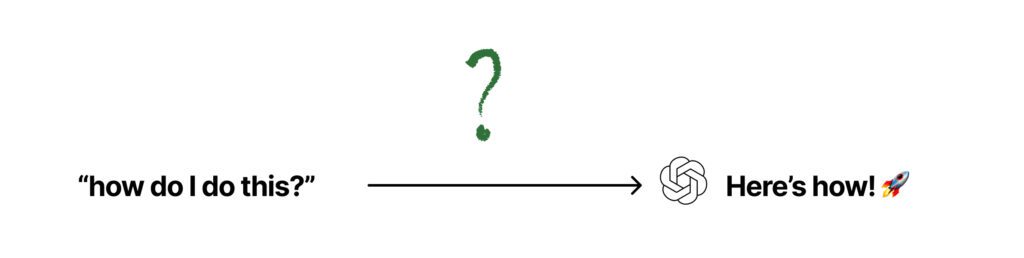
You have no insight to what data, information, and math it used to get there. Because you don’t see the inbetweens, you’re stuck judging only the output as good or bad. You’ve ignored the process on how it got there, and therefore have a very shallow understanding of what you’re actually sharing and looking at.
Process is important. Scientifically, process is how we determine the reasons for an output and the variables of recreating/revising it.
Taps into our weakness as a species (greed)
I don’t think there’s any question on whether or not humanity has issues with greed and power. A particular weakness of us as a species is self-idolatry and selfishness. We want things faster, we want more of it, we want control of it. It’s no surprise then that we’ve built AI to emphasize fast output. We’ve built an entire technological system to soothe the desires for more.
Sure, AI might be able to help you find information to absorb quickly. But is ‘fast’ the best part of human intelligence? Where has rushing, the overemphasis on output, and a ‘by any means necessary’ mindset gotten us in the past?
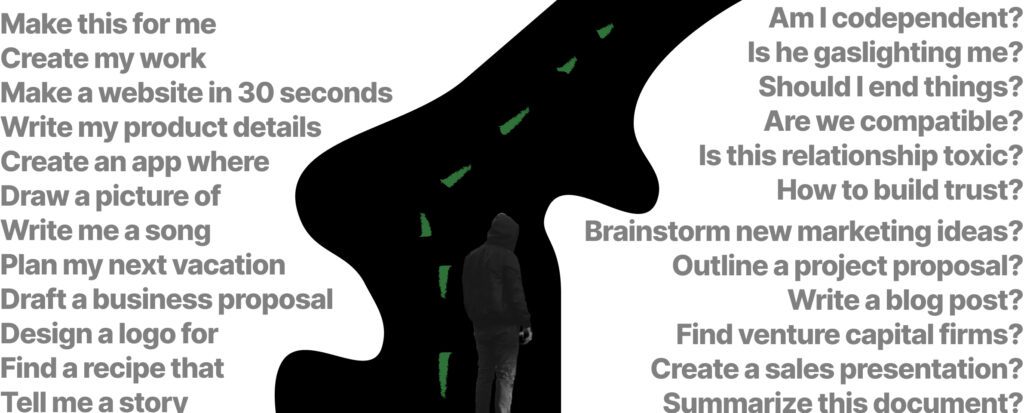
The Loss of Passion & Process
People are not doing things for the love of doing them. We’re losing out on the magic of the process and how it transforms us. Favoring the outcome we’re at over the journey that takes us there. Yet the process is the joy, it’s the foundation on which we set our character on.
This is unfortunately not new, but this tool we’re using to do this and the risk it creates is wildly different from anything we’ve seen before. Within just a few years, we’re seeing a steady decline in human generated content. The literacy rates of people are dropping rapidly. And some creatives are abandoning their post of completing the process. Giving into the pressures of the high output favoring expectations of those paying them.
It is hard to care deeply about things that come quickly and leave just as fast to move onto the next better thing. The outputs we’re seeing online are labeled as AI-slop, which can be extreme, yet the label was created for a reason. It’s passionless outcomes we’re interacting with.
What we’re seeing
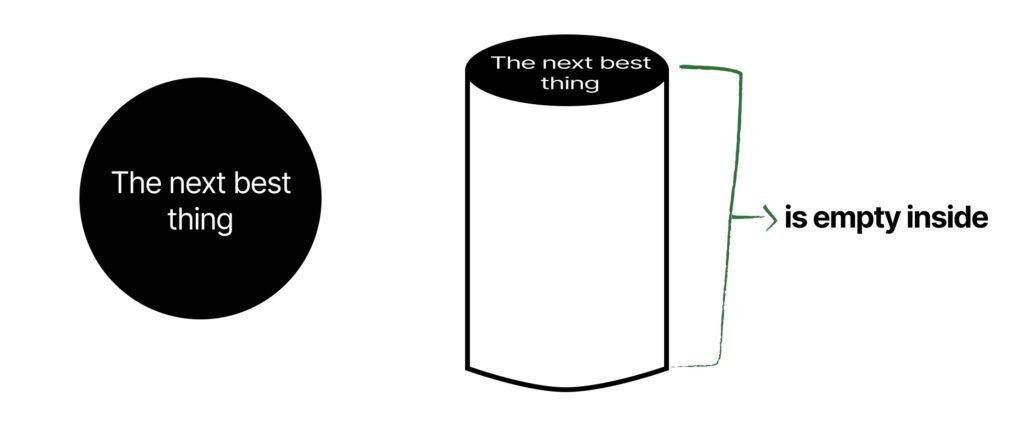
Hard shelled businesses with nothing inside.
Tons of businesses are now being created through the ease of AI. Automating processes once complex. Creating products and services easily that once felt out of reach.
Some might measure the metric quantity as a positive. However, a lot of these businesses are hollowed out. They don’t have the team in place to care, typically run by solo-operators looking to make a lot of money quickly.
When a leader of a business creates for outcomes only, we lose touch with the heart of it. It is hard to connect to a business or brand that doesn’t really care about what they do.
Delayed gratification? More like no frustration tolerance.
We’re dealing with serious issues on delayed gratification. We cannot blame AI for this solely. Social media, the nature of trends, and overconsumption has been steadily inclining our incapability to tolerate slowness and stillness.
The result of that kind of behavior is often a very low frustration tolerance. Frustrations that come up when solving complex problems, creating innovative solutions and going about day to day life have become majors that stop us in our tracks. Rather than things that inspire us to keep going to create better things.
It’s not easy to take your time, enjoy the process and find the best solution when the world rewards something else.
We’ve Officially Entered Into An Era Of Self-Replacement
All of this ultimately leads to the replacement of ourselves from our work and our lives. We’re favoring the security and comfort of a model that can do the hard things for us, take the responsibility for us, and create the outcomes for us.
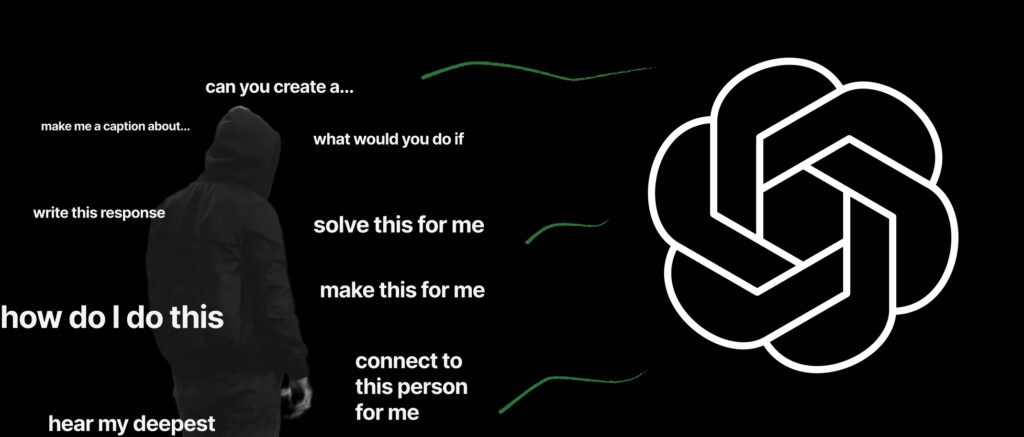
Just getting the work done.
We’re seeing it everywhere. People are just getting the work done. They’re using AI to replace themselves every step of the way. Lifecoaches are no longer writing their articles. Designers are no longer using design thinking and research to design. New artists popping on the scene born purely of prompting.
Just getting the work done doesn’t create great things. It doesn’t create things that change the world, leave impact and help others.
Removal of self from our life, work and creativity.
Using AI to do your work for you, think for you and solve your interpersonal issues is a dangerously thin line. Most are risking removing themselves from their own lives. Even things like online dating have become chatbots responding to each other over people interacting with each other.
It is simulating connection. But it’s not real.
The resulting disconnection with ourselves and others.
If we expect something else to do the living for us, we should also expect to be extremely disconnected from ourselves and others. We’re replacing our own roles in our lives with something that isn’t living, isn’t ourselves, and isn’t wholly accurate.
Loneliness is rising. The epidemic won’t get better if we are also removing ourselves from what we do.
We need to care more.
In the words of Will Guidara, author of Unreasonable Hospitality, ‘It’s cool to care’. We don’t care more by having things other than ourselves do the work for us, we care more by being deeply involved. Caring creates great things.
Caring about what we do
We need to stop favoring fast outputs, high outcomes and rapid cycling to the next thing. We need to care deeply about what we do and why we do it.
Our jobs and careers are not just advantages to chase material success. They’re opportunities for us to create and do incredible things for those around us. Approach what you do from that mindset, and you may find plenty of chances to bring yourself and your passion back into your businesses rather than replacing it with AI.
You may also find when you look at life through that lens, that your daily practices are not things you actually care about. Use it as a signal to find where else you can create opportunities to give to the world.
Caring about how we do it
How we do what we do is important. We can achieve similar outputs a multitude of ways. Be passionate enough to care about how you achieve just as much as what you’re looking to achieve.
Ultimately the process is what we remember and are defined by.
Caring about who it impacts
What you do as a person to contribute to the world impacts somebody. Try to deeply care about who that person is.
If you’re in plumbing, you’re not helping a customer, you’re helping a human being. If you’re a life coach, they’re not your client, they’re somebody’s son, daughter, spouse or individual.
Care about who you impact with what you do. From relationships, to work, creating and living. If you start there first, you’ll likely find you’re reaching less for the chatbot to do it for you.
You don’t need to replace yourself from your life to care.