

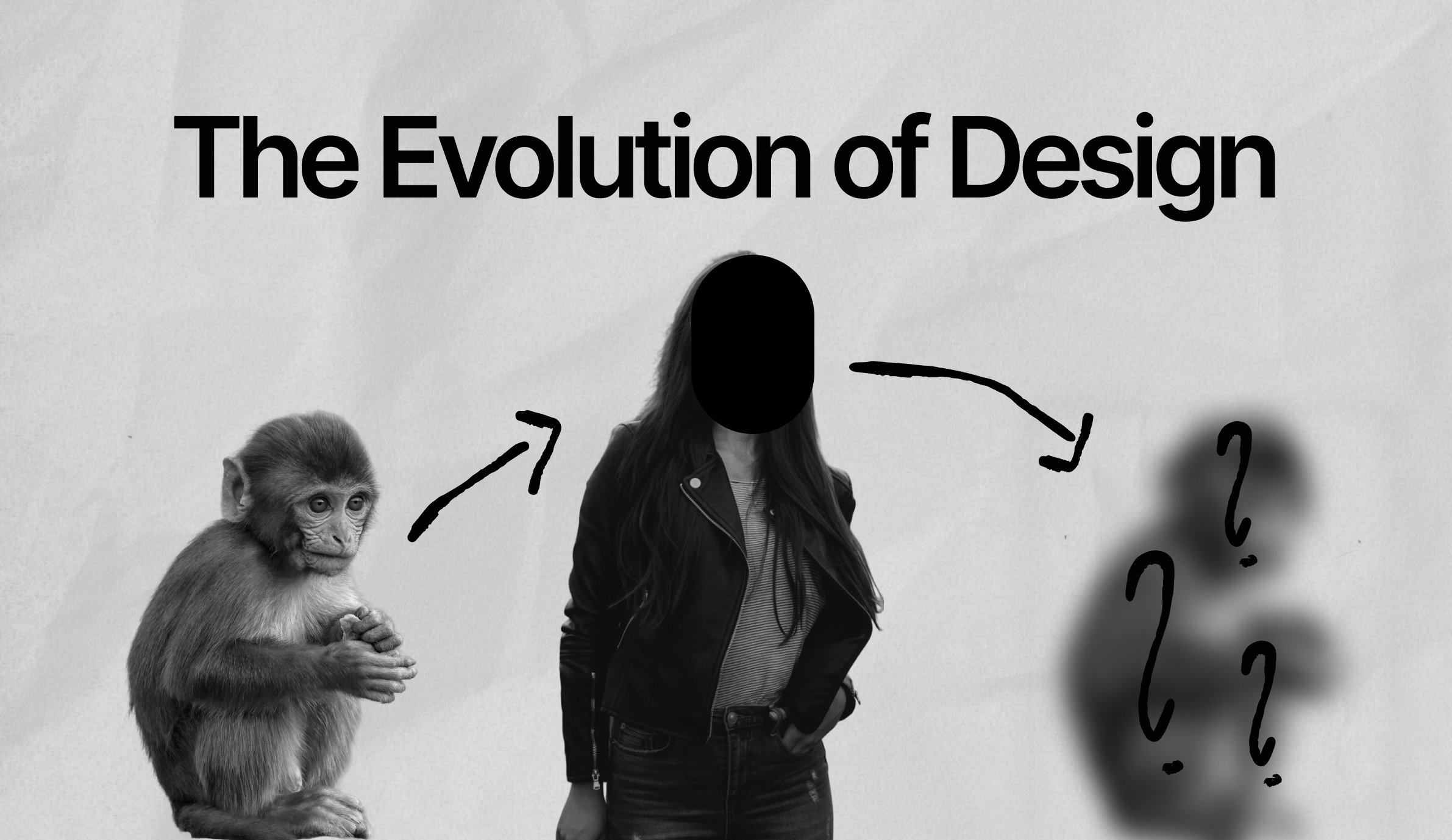
The concept of a ‘designer’ as a specialized named profession was brought about by the industrial revolution in the late 19th and early 20th century. However, the concept of design has existed since the dawn of time.
We designed hieroglyphs to communicate stories, and we created our beds from straw and hay. We built thatched roofs to protect from moisture– and a wheel to move ourselves longer distances and to carry heavy weights.
Yet it was never a solo designer drawing blueprints credited for these ‘inventions’ that helped us in contrast to how we accredit design achievements in our modern day. It was a general effort of everyday people needing better things for their community and lives.
To push further, hyper-specialized design roles within an industry as we know it today is a very new concept. Siloed professions of UX designer, UI designer, brand designer, graphic designer, product designer, digital product designer, typeface designer, print designer, web designer, logo designer– separate from production and prototyping is a birth resulting from the boom in technology in the 1990s to early 2000s.
Designers like the Eames couple, or the revolutionary Raymond Loewy having a multi-disciplinary approach was not just normal, but expected. It was not enough to design one aspect of a thing, but the whole, and to create prototypes for proof of real life workability.
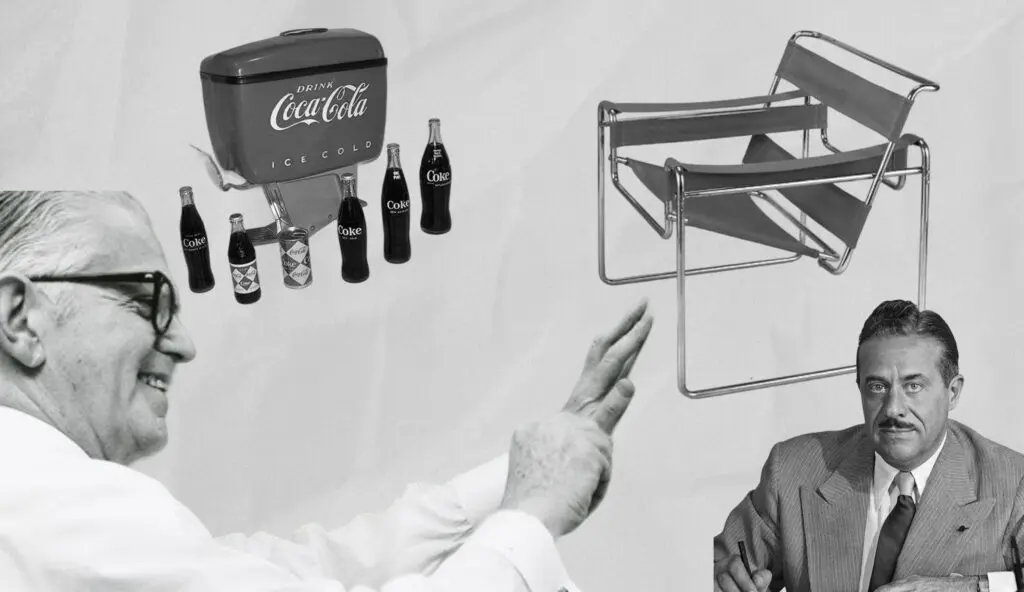
Raymond Loewy himself is credited for the design of 50s cars, to logo design, and even the classic Coca-Cola bottle.
Bringing the timeline forward, it’s not hard to find a post on LinkedIn from designers bashing job postings expecting them to be multidisciplinary with the advent of AI streamlining prototyping and execution.
As a designer myself, I too feel the strain of a multidisciplinary career but often ponder if that is an effect of poor expectations on my part. Is design truly evolving into something new and bigger with AI, or is it simply returning the role of multidisciplinary, comparative to how they used to be in a modernizing society?
In order to understand if design is becoming something new, or returning to its roots, we have to start at the beginning.
Mini-Design History
Humanity And Early Tools
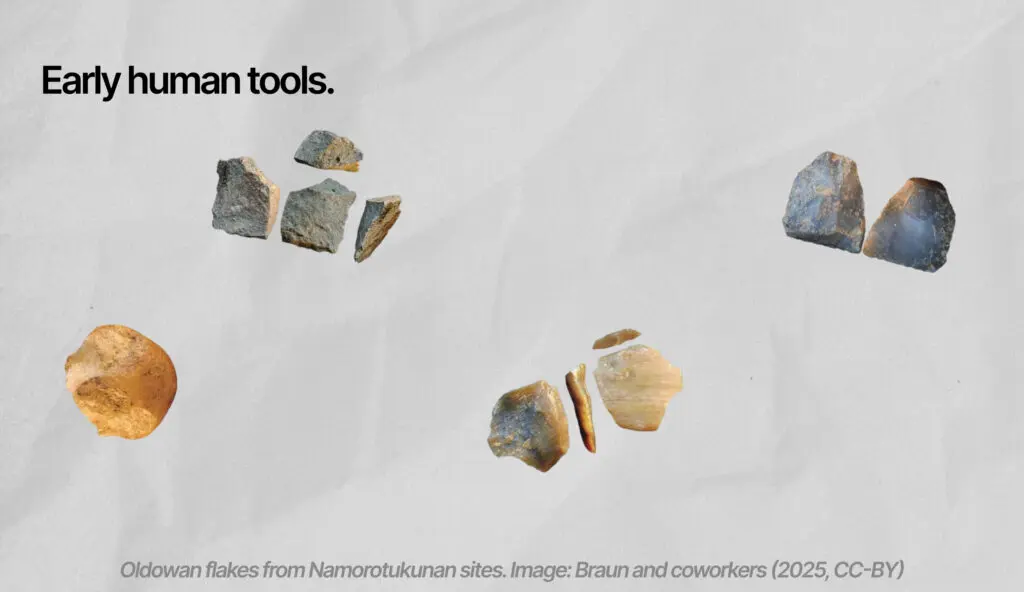
In order to talk about design evolution, we have to start in the beginning formats of how design showed up in humanity prior to our modern view of it. Far before the industrial revolution, it is theorized that the first showcase of a design was early human stone-age tools.
Humans learned that if they struck one stone with another a certain way, a flake could be broken off that was sharp enough to pierce animal hyde. It is important to note that ‘design’ of such a tool existed within a cultural role context. It is a person that struck the rocks, discovered the sharpness, used it and refined it to a tool. The user created its tool and refined it through its knowledge of use through testing, not an external source.
It is the same with something like the wheel. There was not one individual credit for its innovation but multiple cultures at different times discovering methods for easier transportation within its own context. Spanning over thousands of years, the wheel evolved into a better tool. From wooden logs, to hard stone to wood with spokes for faster movement.
The point I am trying to make clear is that cultural roles designed for themselves, not an external source barred to a singular output unlike designers as we know them today.
The Birth of Design Roles
Fast forward thousands of years, the label for the cultural role that designed for its own use and others became known as the artisan. The person who conceived an object in their mind was also the craftsman that created it to completion to be used or sold. Artisans were the dominant producers of products prior to the industrial revolution. Artisans were responsible for one product like pottery, architecture, textiles, jewelry, or tools.
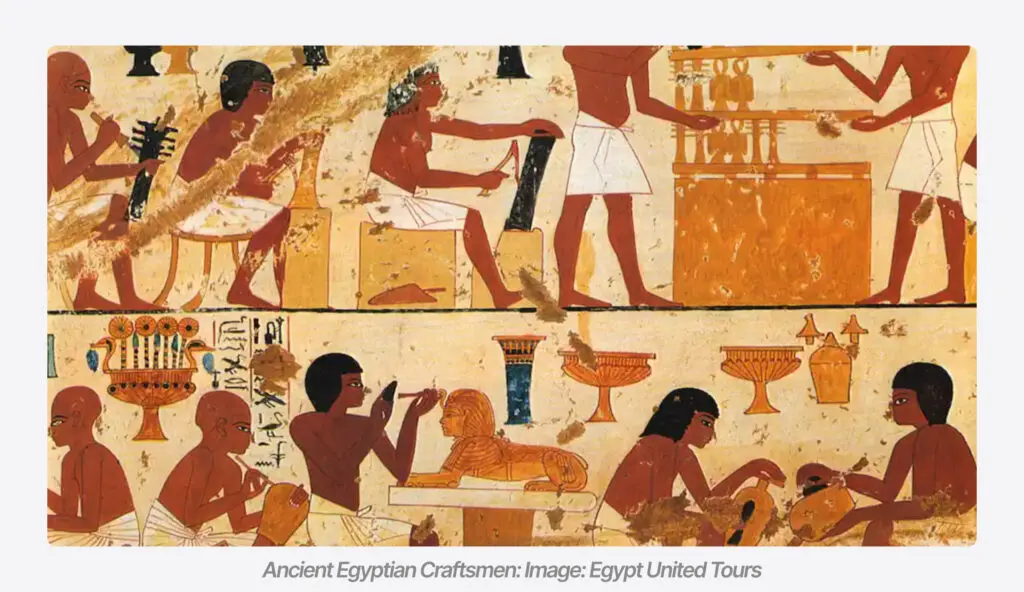
Artisans were the first concept of the separation between the creator and the end user. They refined their craft based on cultural requirements and user demands. And for thousands of years this format remained until a recent catalyst: The Industrial Revolution of the 18th century. Which changed the layers between design to crafted goods to use cases even further.
Suddenly with the advent of steam engines, the spinning-jenny and other manufacturing tools transitioned us from an agrarian and handicraft economy to one that is dominated by industry and manufacturing. This meant that instead of going to your local craftsman, there was a manufactured goods from a company that focused on one industry (versus one item) you could purchase.
But these manufacturing machines were unique, they could not produce items in the same way an artisan could. Creating a need for product designs to have production under such machines accounted for and tested.
This formed early industrial designers as we know them to create better products for manufacturers that combined consumer likeness and ease of manufacturing capabilities for mass production.
A designer was now the bridge between two worlds. The manufacturer and the consumer. The lens of the designer suddenly became wide, often working for multiple companies to create products that consumers would love. In contrast to the artisan responsible for a singular item, a designer could be responsible for designing a wide range of items for a wide range of industries.
What Industrial Designers Did
As the industrial revolution moved forward, the late 19th to early 20th century marked a distinct evolution in the role of designers as well. At the turn of the century, the job of a designer had three distinctive modes of work. These modes though had yet to become industry or product limited, and merely encompassed models of thinking a designer would assume.
The Systems Thinker (Bauhaus)
Think of the systems thinker as the designer that created not just the product, but the system that would produce the product too. In the context of something like a chair, designers would design the beautiful chair– and a system to manufacture it easily, affordably and functionally.
This meant that they would consider unique parts of the process of production. Systems Thinkers are responsible for the widely accepted workflow charts and shapes we use today as designers.
The Corporate Stylist
Popular ‘Corporate Stylist’ designers like the iconic Raymond Loewy and Henry Dreyfuss are responsible for the term ‘industrial design’. The unique role they would be hired for, was to make products look a certain way to encourage consumer spending.
They too were required to consider production, but relied less on designing a production system and instead designing a functional prototype as proof of concept for engineers to then reproduce. They would collaborate with manufacturers but would not design the manufacturing system.
A corporate stylist could be responsible for designing a multitude of things, from refrigerators to company logos, automotives, chairs, phones and more. Consider the iconic 50s vehicle and Coca-Cola bottle, or the Greyhound bus and a Lucky Strike cigarette box – all designed and prototyped by Raymond Lowey– not different design hyper specialists.
The Total Environment Artist (Gesamtkunstwerk)
The final model of design thinking existed within a group that believed the role of a designer was to design everything. From the architecture of a building, down to a simple doorknob. This was to emphasize everything being a single unit of art, versus a separatist collection of styles.
What about designers now?
Evolution of design
Technology changed everything. With the advent of computers, designers needed to focus on creating entire digital operating systems– rather than just physical.
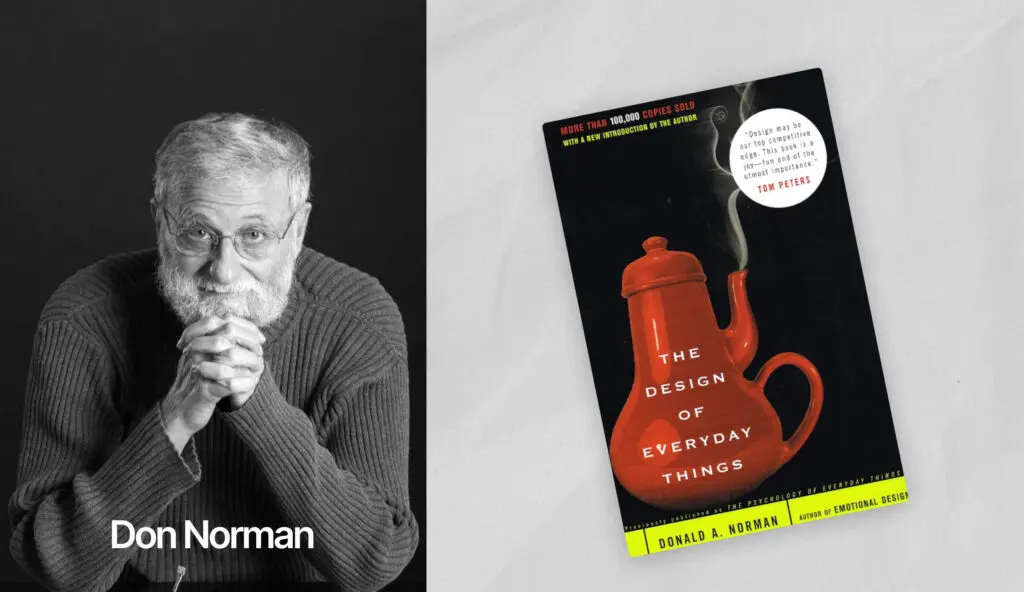
So in 1993, the term User Experience Architect was coined. Don Norman, at the time working for Apple, created this term to cover the experience of a given user in an entire system. Feeling that widely accepted terms like “human interface” and “usability” were too narrow to consider the full scale of a person’s interaction with a full system from external hardware to what appears inside the digital screen.
But the role of the designer didn’t remain all encompassing like industrial designers were. As technology became more complex, the need for specialist designers emerged. Forging two separate paths for designers today, the physical goods designer and the digital designer. There was the person who designed the computer hardware, and the person who designed the screens in the digital interfaces.
Specialized tech design roles
As the paths for design jobs continued to divide as products, systems and technologies became more complex, designers began to assume even narrower roles within physical and digital goods. A stark change from the industrial designers who created anything in any industry.
Then technology designers began to divide within themselves. As we reach the early to mid 2000s, the role of functional tech designer to aesthetic designer is divided. A line between UX and UI designer was drawn. Instead of one person doing both, now there was one person designing the wireframes, and another designing the interface to go over a wireframe.
I’m going to drive the point further, because the divide kept happening. Tech continues to boom, and companies like Facebook or Google with such expansive interfaces with hundreds of products within it, need even more specialized roles.
You began to see whole teams focused solely on something as simple as a search bar within Facebook, or a chat bubble in Google. One designer could be focused on one button for a whole year. Which would be akin to seeing a toaster knob design specialist in the industrial revolution– it was a bit ridiculous yet a needed strategy for designing expansive systems.
This created a bloated company model. As the tech market boomed, companies grew, and the demand for hyper specialist designers grew with them. And because of this bloat a tech design job,what used to be a rare role, suddenly was in popular demand. Everyone wanted to be a tech designer. You get paid well, the barrier to entry is lower due to singular focus, and the industry was booming.
The layoffs
It didn’t end well though, as most bloating seasons do. You would assume tech companies overspending on designers meant those hired would outperform themselves. But the overhiring turned their companies into inefficient bureaucracies. What could be a simple design change became complex with so many roles focused on tiny details.The question of efficiency was at hand.
And the companies understood the error they made– the major layoffs began. One by one large tech companies announced layoffs of 200,000 team members on average each year since 2021. From middle management on projects to unnecessary design roles and junior devs. The focus became agile & strong teams that produced quickly to evolve with the changing market that AI produced. The year now labeled as, ‘The Year of Efficiency’.
So the hyper specialist role died out as quickly as it came and AI quickened the cleanup process. With the promise of automation and faster output, AI was the missing puzzle piece for tech companies looking to rebuild their efficient practices. And 2026 is off to a rough start– Amazon, Google & Microsoft pledging to layoff over 165,000 .
Designers are facing a conundrum. The role known for job security due to the tech boom became the most insecure. Those seeking to learn tech design for a pampered career are being weeded out. You can no longer get by being a button designer, or just a web designer.
Design has taken a generalist approach, as designers are expected to now create everything for the companies they work for with the help of artificial intelligence to simplify their processes.
What’s going to happen?
The return of design to its roots
The argument at present is that AI has made the designer’s role obsolete. With challenges online comparing the designer output versus Chat-GPT or Claude. New job postings for designers are up, and the requirements for what a designer to do are enormous and expansive.
However, the challenge isn’t that designers are truly becoming obsolete and unimportant. The challenge is that the role of the designer is changing from output creator to systems & story teller. You can now be responsible from idea to production of a product. And the products designers create are not industry bound anymore. The value is their process to getting to a certain outcome using systems and storytelling.
The industrial revolution demanded design generalists with a unique process to solve problems. They were designers who used their systems and models of thought to create value for the businesses they were contracted by. Sometimes that was designing new products, sometimes that was designing better subway systems. It wasn’t singular.
Industrial designers were there to create for the needs of real ordinary people in any way. The role of the designer today is appearing to mirror the same way the original designers.Yet designers today flock to posts that complain about the demand to be multidisciplinary in job listings.
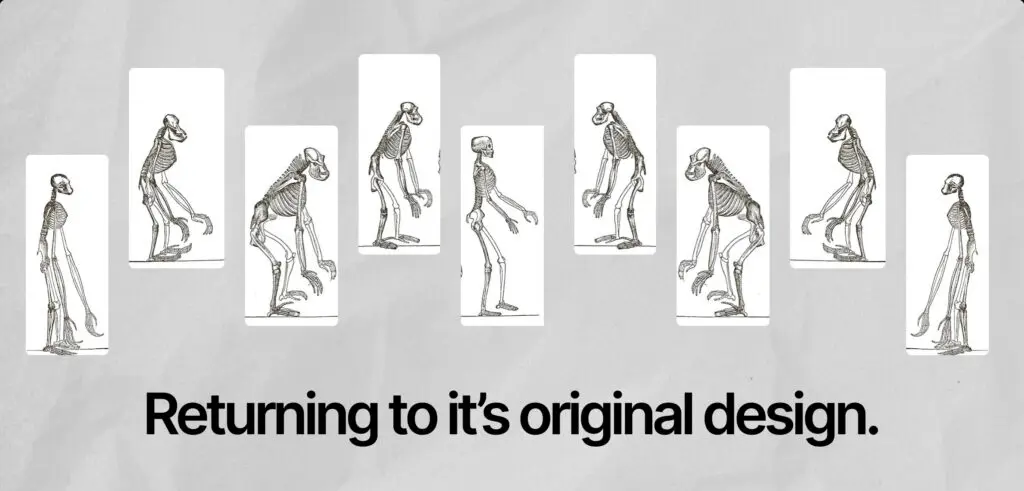
We’ve forgotten that what we do is solve problems for people using design. We are not button specialists or logo designers, but pioneers for the next best way of doing things. The evolution of design is not that the role disappears, but that it returns to its inception goal.
While that is hopeful, it doesn’t mean businesses have it all right with their expectations. The compensation for the role requirement is extremely low, and the pressure put on designers in conjunction is building push-back. AI has made it easier than ever for business owners to feel like they too can create something easily that a designer could without the cost. Trading quality and effectiveness in return they get something completed quickly by AI.
AI & Design
Contrary to a corporate business wet dream, AI cannot create everything for you a designer can at even 20% of the level of quality and effectiveness. This is because AI works off of a model of averages and probabilities of already existing data points. Want a SaaS website tailored to your new business? AI will take the average of SaaS websites online, use your prompt, and then create. It’s why you see the influx of black, purple, blue and white websites. Averages.
AI does not solve problems from the position of most effective, it solves problems from a what-the-prompter-will-most-engage-with position. Meaning it’s creating outputs it thinks the business owner will like, not what will work best for their business. And OpenAI is not shy from admitting it.
So what will AI do to the designer? It will demand that the designer use it for efficiency not for creation. It won’t make designers obsolete, it will require them to become agile, skilled, and operate from refined systems and storytelling for the businesses they work for.
Where AI stands now, the hype is fading. The bubble will eventually pop economically speaking and we’re closing in on a baseline of expectations of what it can truly do well. AI slop blogs don’t work, user’s hate AI generated content, and AI created websites are less effective than those crafted with the human touch.
This is a matter of just having another tool on the tool belt of creation, not about replacement.

The future for designers
There is an implication that those who weren’t deeply attached to solving human problems with design, are going to be weeded out. The demand on designers is going to continue to intensify, and those passionate and willing to navigate the change are the ones that will survive this. The ones looking to automate their roles and cash-in are on their way to the dumpster.
We saw this with the layoffs, and we’re going to see it again with AI. Design will return back to process, taste, and the end consumer expectation. The tools of doing that will become multidisciplinary and we will see new things again with AI as our tool.
Designers will stop being responsible only for one piece of the system and instead begin to design and solve problems for the whole much like industrial designers of the past solving business problems and manufacturing while creating a wide array of products.
As for compensation and value, it’s actually up to us. We set the standards of work for each other, and if we devalue ourselves out of scarcity we don’t just impact our income but we impact our capacity to create greater things. Fair compensation is a lifeblood for a designer to continue to produce. Without it– that is what will cause designers to die off. That is what will cause a world overproduced with AI slop from the uninspired.
If we continue to position for what is good, right, fair and for real people– the job will become all the more lucrative.
It is up to you to set the tone and standard for the future, because real people depend on well designed things to get through life.